How Do Pimple Patches Actually Work?
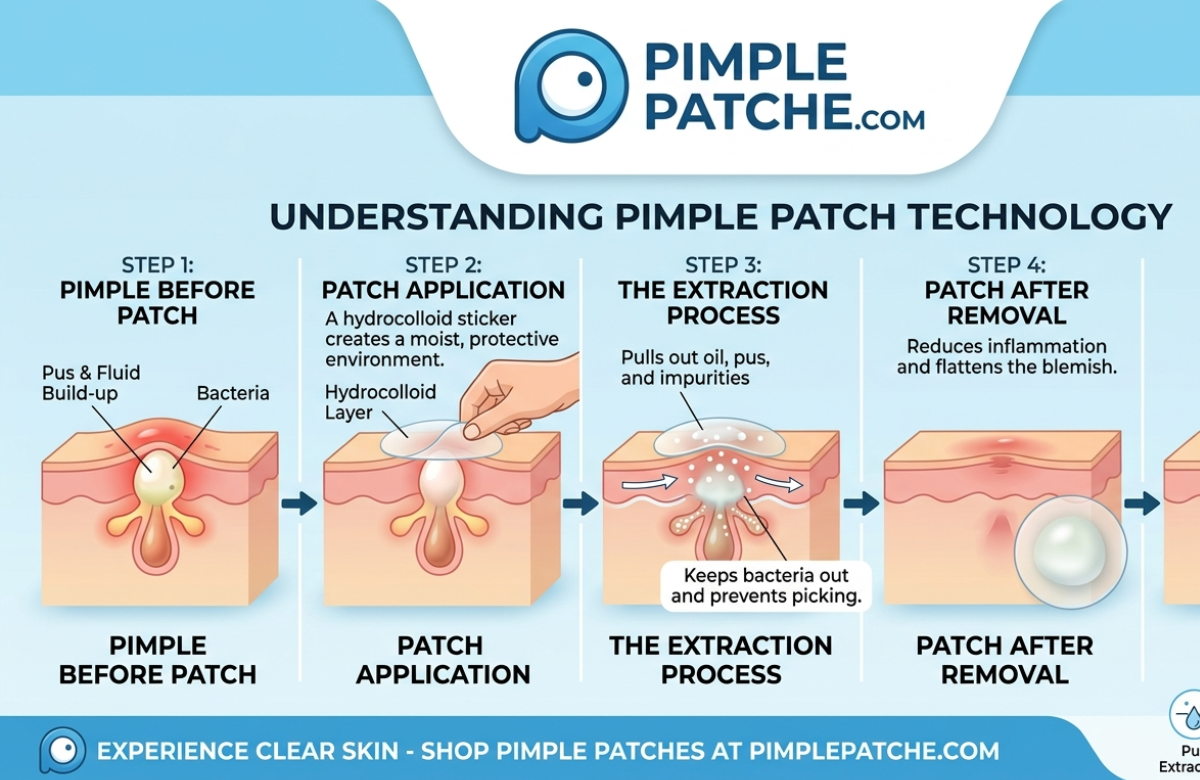
A pimple patch is a small adhesive dot, usually made from hydrocolloid or dissolvable microneedles, that you stick over a blemish. Hydrocolloid patches pull fluid and oil out of a surfaced pimple and keep the area protected while it heals. Microneedle patches puncture the top layer of skin and release actives — like salicylic acid or niacinamide — into the blemish before it even surfaces. Both work. They just work on different stages of a breakout.
That distinction matters more than most articles let on. If you’ve ever patched a deep, painful bump and woken up disappointed, it’s not that patches don’t work. It’s that you used the wrong tool for that stage of acne.
Hydrocolloid Overnight Patch
Best for whiteheads and popped pimples you want gone by morning, without disrupting your skin barrier.
Why Hydrocolloid Works for Whiteheads But Not Cystic Acne
Hydrocolloid is the same material used in wound-care dressings for pressure sores and leg ulcers. When it’s applied to a lesion, it absorbs fluid and triggers a gel-forming reaction that keeps the area moist — and that moist environment is what supports the skin’s own repair process underneath. It also helps activate the immune cells that clean up inflammation, which is part of why a pimple often looks smaller and flatter by morning after an overnight patch.
A small clinical comparison backs this up. Researchers compared hydrocolloid patches against surgical tape on people with mild to moderate acne, swapping the patch or tape every two days for a week. Both groups improved, but the hydrocolloid group saw better results for redness, oiliness, dark pigmentation, and sebum control.
Here’s the part most articles gloss over: hydrocolloid only works on lesions that actually have fluid to absorb. If you’re dealing with clogged pores, blackheads, or whiteheads that haven’t opened yet, a hydrocolloid patch has nothing to pull out — and it isn’t effective on cystic acne at all, since those lesions sit too deep under the skin for a surface patch to reach.
That’s not a flaw in the product. It’s a mismatch between the tool and the job. Hydrocolloid is built for surfaced, oozing, or popped pimples — not the deep, tender bumps that never quite come to a head.
Microneedle Patches: A Different Mechanism Entirely
Microneedle patches look similar but do something almost opposite. Instead of sitting on the surface and absorbing outward, they use tiny dissolvable projections to deliver active ingredients — hyaluronic acid, niacinamide, sometimes salicylic acid — directly into the blemish. Despite the name, these “needles” are usually dissolvable crystals, not metal points, and they have nothing to do with clinical microneedling rollers.
This is why microneedle patches get marketed for early-stage and cystic breakouts. Hydrocolloid patches clean up the aftermath of a breakout that’s already surfaced. Microneedle patches intervene earlier, delivering actives into inflammation that’s still forming under the skin. Some dermatologists suggest using both in sequence — a microneedle patch the moment you feel a bump forming, then hydrocolloid once it actually surfaces.
Timing differs a lot between the two as well. Hydrocolloid typically needs 6–8 hours or an overnight wear to fully absorb fluid, while microneedle patches dissolve within 5–15 minutes but should stay on for 2–4 hours so the actives can fully release.
Microneedle isn’t automatically “better,” though — it’s a trade-off. The needles can cause mild discomfort and generally aren’t recommended for sensitive skin, whereas plain hydrocolloid is about as gentle as adhesives get.
Dissolvable Microneedle Acne Patch
Only patch type that delivers actives below the surface — worth it if hydrocolloid alone hasn’t touched your cystic breakouts.
Cost-Per-Patch: What You’re Actually Paying For
Most comparison articles skip the math, or bury it in a table nobody reads. Here’s the rough breakdown based on current published pricing across popular brands — not one cherry-picked example:
| Patch Type | Cost Per Patch | Wear Time | Best For |
|---|---|---|---|
| Hydrocolloid (basic) | $0.10–$0.25 | 6–8 hrs / overnight | Whiteheads, popped pimples |
| Hydrocolloid + salicylic acid | $0.20–$0.40 | 6–8 hrs | Mixed / hormonal breakouts |
| Microneedle / microdart | $0.35–$0.70 | 2–4 hrs | Cystic, under-the-skin acne |
| Liquid patch | $0.40–$0.60 per application | 6–8 hrs | Daytime wear under makeup |
The basic hydrocolloid dot is cheap because it’s mechanically simple — pectin, gelatin, or carboxymethylcellulose on an adhesive film. Microneedle patches cost more because you’re paying for a delivery mechanism, not just a sticker. If you only ever deal with the occasional whitehead, spending $0.50 a patch on microdart technology is money spent on a feature you don’t need. If you’re dealing with cystic breakouts weekly, that math flips fast — one microneedle patch costs a fraction of a dermatologist visit.
How to Apply a Patch So It Actually Works
- Wash and completely dry the area. Any leftover moisture or oil stops the adhesive from sealing, and stops hydrocolloid from absorbing properly.
- Skip active ingredients right before patching. Retinol, vitamin C, and exfoliating acids applied first will sit trapped under an occlusive patch, which can irritate skin instead of helping it.
- Press the patch flat from the center outward. Air bubbles at the edge are the number one reason patches lift early.
- Leave it on for the full recommended window. 6–8 hours is standard, and going a little past that isn’t a problem, but avoid exceeding roughly 12 hours. Once it looks raised and cloudy, it’s done its job — swap it for a fresh one.
- Peel gently from the edge, not the center. Ripping it off can pull at the healing skin underneath.
Salicylic Acid Hydrocolloid Patch
Middle-ground option for combination or hormonal acne — absorbs fluid like standard hydrocolloid but adds mild exfoliation.
Which Type Is Best for Your Skin?
If you have oily or combination skin and mostly deal with surfaced whiteheads, start with a basic hydrocolloid patch. It’s cheap, gentle, and does exactly what that skin type needs without extra actives that could clog pores further.
If you have sensitive skin, stick with plain hydrocolloid and skip microneedle patches — the added actives, salicylic acid especially, can sting on a compromised skin barrier, and the microneedle mechanism itself is more likely to irritate reactive skin.
If you get recurring cystic or hormonal breakouts, a microneedle patch applied the moment you feel a bump forming under the skin is the more useful tool. Hydrocolloid won’t have anything to absorb yet at that stage.
None of these fix acne itself — they manage individual blemishes. If you’re getting new cystic lesions weekly, that’s a conversation for a dermatologist, not the patch aisle.
Can You Wear a Patch Under Makeup?
Yes, with a caveat most brands don’t lead with. Piling on heavy foundation or concealer to hide a patch usually makes it more noticeable, not less. And if you use an oil or serum underneath, make sure it doesn’t soak into the patch first — a wet patch won’t adhere well.
The trick that actually works: apply a thin, even layer of makeup and use a matte finish. Dewy or radiant finishes reflect light and tend to make the patch’s edges more visible, while a matte concealer helps it blend into skin. Standard clear hydrocolloid dots do fine under makeup for most people. If you want something built specifically for daytime wear over makeup, liquid patches exist for that — they dry clear and are designed to sit under makeup and sunscreen, unlike a physical sticker.
One thing to avoid regardless of patch type: heavy sweating. Most brands advise against wearing a patch to the gym or sauna, since sweat breaks the seal the same way water does.
Common Mistakes That Waste a Patch
- Applying to wet or oily skin. The single biggest reason patches peel early or fail to absorb anything.
- Layering active skincare underneath. Retinol or acids trapped under an occlusive patch can backfire.
- Using hydrocolloid on a lesion that hasn’t surfaced. There’s no fluid yet for it to draw out — you’re wasting a patch on a bump it can’t reach.
- Leaving a patch on well past its useful window. Once it’s cloudy and swollen, it’s not doing more work. Remove it.
- Assuming a bigger patch is better. Oversized patches occlude more skin than necessary and are more likely to lift at the edges.
Liquid Pimple Patch
Best pick if you need daytime coverage under makeup or sunscreen without a visible sticker.
FAQ
Can you use acne patches with retinol?
Not at the same time. Retinol exfoliates; patches are occlusive, so layering them counteracts both. Use retinol at night without a patch, and apply patches to clean, unmedicated skin during the day instead.
Do pimple patches work on blackheads?
No. Blackheads are clogged pores, not fluid-filled lesions, so hydrocolloid has nothing to absorb. A patch won’t unclog a pore — that’s a job for exfoliating cleansers or extractions.
How long should you leave a pimple patch on?
Most brands recommend 6–8 hours, and going slightly past that overnight is fine, but avoid exceeding around 12 hours. Swap it once it looks white, raised, or cloudy.
Are microneedle patches worth the extra cost?
Only if you’re dealing with cystic or under-the-skin breakouts. For simple whiteheads, a basic hydrocolloid patch does the same job for roughly half the price per patch.
Can sensitive skin use pimple patches?
Plain hydrocolloid, generally yes. Microneedle patches and anything with added salicylic acid or tea tree oil are more likely to irritate compromised or reactive skin, so patch-test first.
Key Takeaways
- Hydrocolloid patches absorb fluid from surfaced pimples; microneedle patches deliver actives into forming, under-the-skin breakouts. They solve different problems, not competing versions of the same product.
- Cystic acne generally needs a microneedle patch (or a dermatologist), not hydrocolloid — hydrocolloid has nothing to absorb until a lesion opens.
- Cost-per-patch roughly doubles or triples from basic hydrocolloid to microneedle. Match the spend to what you actually need.
- Dry, clean skin before application matters more than which brand you buy.
- Patches manage individual blemishes — they’re not a treatment for recurring or hormonal acne on their own.
Related reading: guide to salicylic acid for acne · article about different acne types · how to build a barrier-safe skincare routine