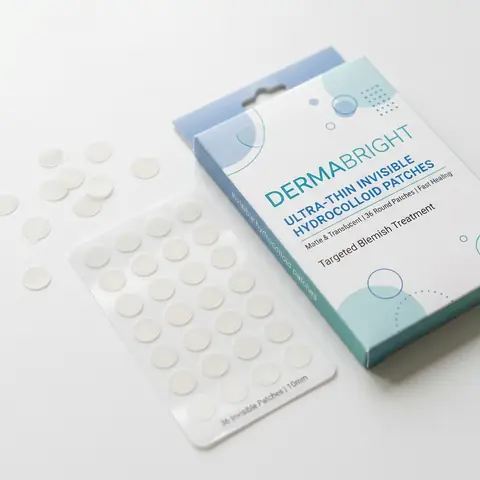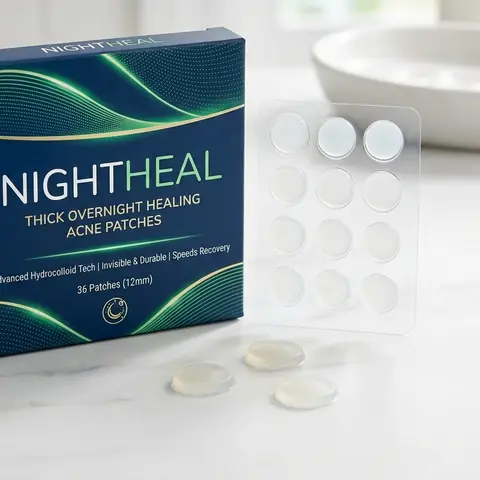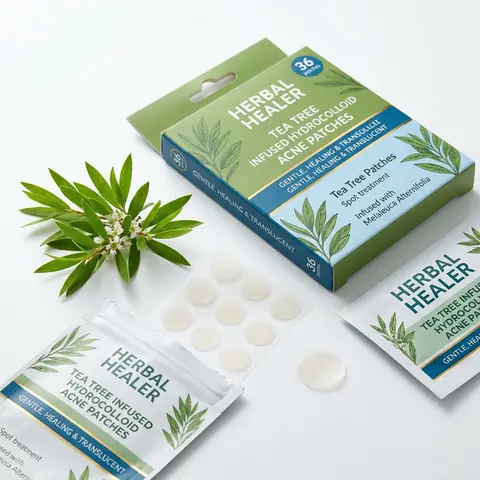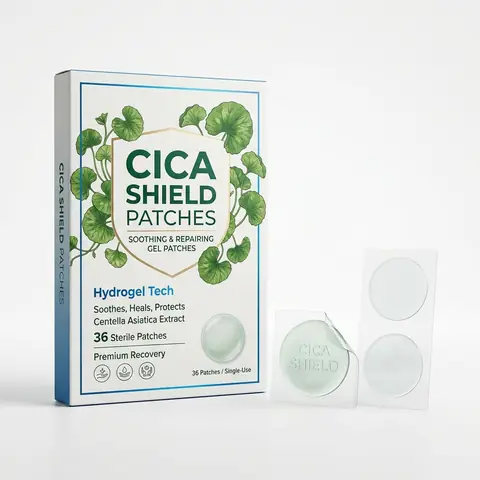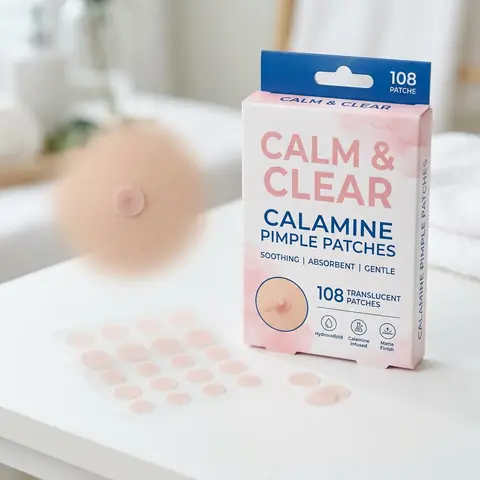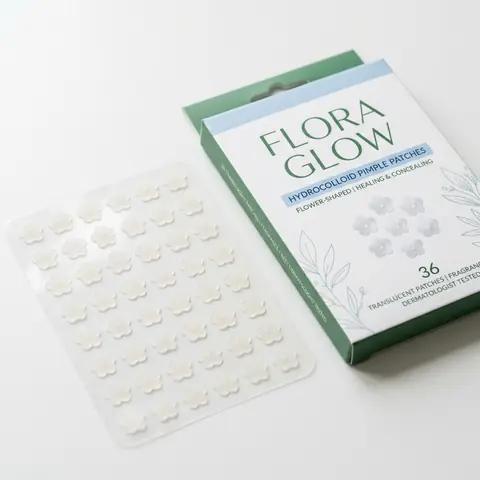
Classic hydrocolloid (round)
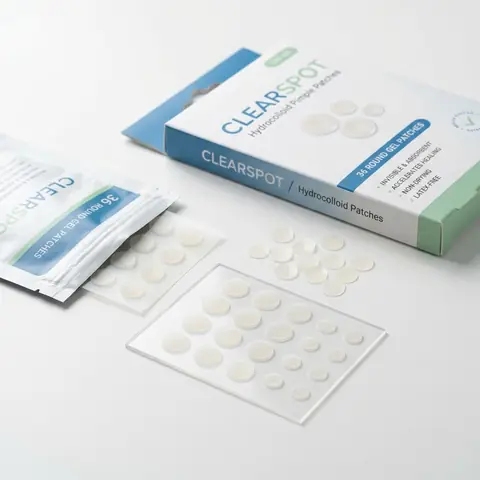
A thin film over a layer of absorbent hydrocolloid. Nothing else added.
- Best for
- Whiteheads, pustules and spots that have opened or drained.
- Watch for
- Adhesive irritation, and wearing it too long.
Everything about pimple patches (also called acne patches) in one place: what they are, which spots they suit, every type, how to use each one, and what the research really shows.
A pimple patch is a small sticker, usually hydrocolloid, that absorbs fluid from a spot with a head or an opening, keeps it covered and keeps your fingers off it. It does not treat the cause of acne, and it does little for blackheads or deep bumps. Ask a dermatologist about painful or spreading acne.
A pimple patch is a small adhesive dressing. Most have a thin outer film over a layer of hydrocolloid, a gel-forming material first made for wound care. When the layer meets fluid, it absorbs it and turns white.
Patches are also called acne patches, spot patches, acne stickers and hydrocolloid patches. They are the same kind of product.
Patches need something to absorb. They suit whiteheads, pustules and spots that have opened. They do little for blackheads and cannot reach deep, painful bumps. Read the full spot-by-spot guide.
Is the spot a deep, painful lump under the skin?
Yes: A patch cannot reach it. Do not squeeze. See a dermatologist, especially if there are several.
No: Go to the next question.
Does it have a visible head, or has it already opened or drained?
Yes: A patch is a good fit. Use clean hands and dry skin, and follow the pack.
No: Go to the next question.
Is it a closed red bump or a blackhead?
Yes: A patch will do little. Leave it alone, and ask a pharmacist about options.
No: If you are unsure, ask a pharmacist or dermatologist.
The main types are plain hydrocolloid, medicated, and microneedle. Many other patches are the same material in a different form: thin and clear for daytime, thicker for overnight, shaped, extra large, or sized for the nose, chin, cheek or forehead.
| Type | Evidence we found | Chance of irritation | Best suited to |
|---|---|---|---|
| Plain hydrocolloid | Some small trials | Lower (adhesive only) | Whiteheads, pustules, popped spots |
| Medicated hydrocolloid | Little | Higher (actives) | People whose skin tolerates the ingredient |
| Microneedle | Early only | Higher (actives, spikes) | Marketed for closed or deeper spots; unproven |
| Thin, clear (daytime) | Same material as plain | Like plain | Being less visible |
| Thicker (overnight) | Same material as plain | Like plain | Wear while you sleep |
| Shaped, XL and area patches | Same material as plain | Like plain | Fit and coverage |
Images are illustrations of each type of pack. They are not product recommendations or test results. Buy links are added by the site owner.

A thin film over a layer of absorbent hydrocolloid. Nothing else added.

A thinner, more transparent hydrocolloid patch that is less noticeable.

A thicker, more visible hydrocolloid patch meant to be worn while you sleep.
What the added ingredients are

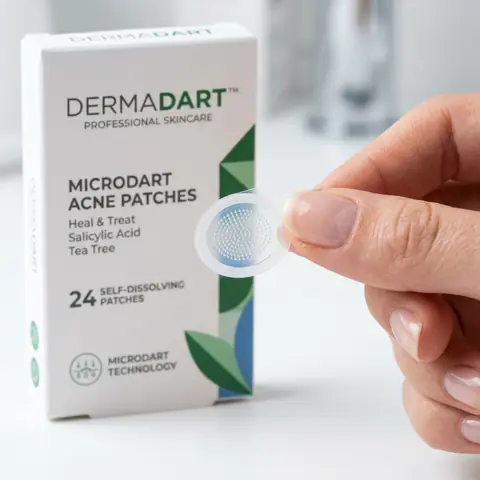
Hydrocolloid with salicylic acid added.

Hydrocolloid with tea tree oil added, which is described as antibacterial.

Hydrocolloid or hydrogel with centella asiatica added, which is described as calming.

Hydrocolloid with calamine, a skin protectant made of zinc oxide and iron oxide.

A patch with tiny dissolving spikes that carry ingredients into the top layer of skin.
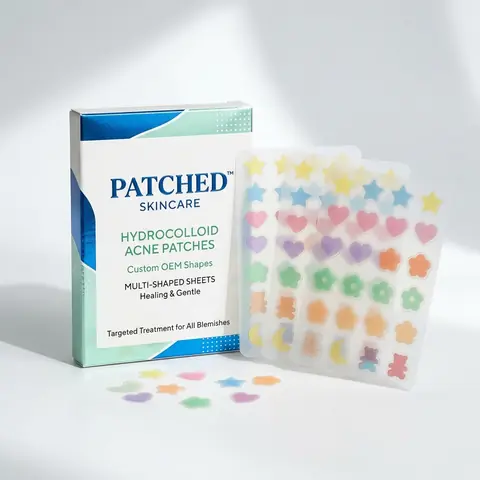
About shaped patches

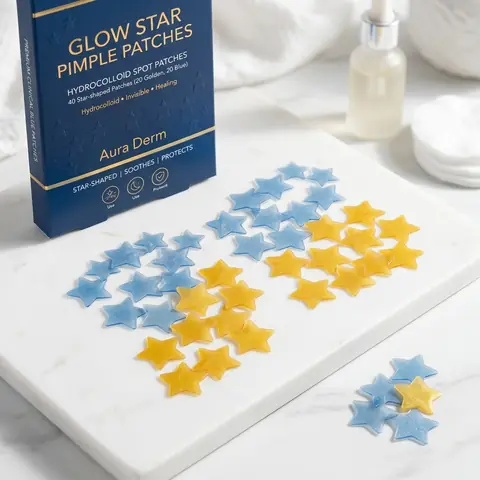
A plain or medicated patch cut in a star shape, often in colors.

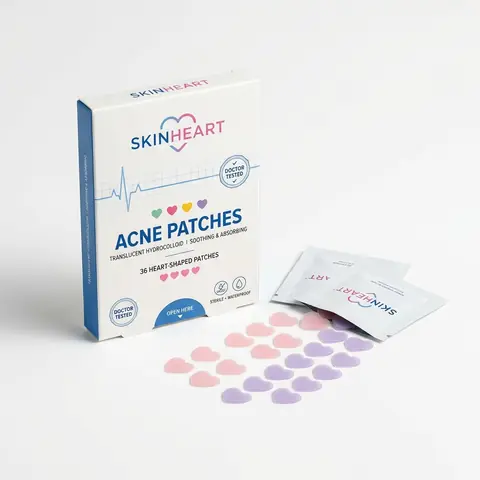
A patch cut in a heart shape, often pastel.

A patch cut in a flower shape.

Packs with several shapes, such as stars, hearts, flowers and dots.
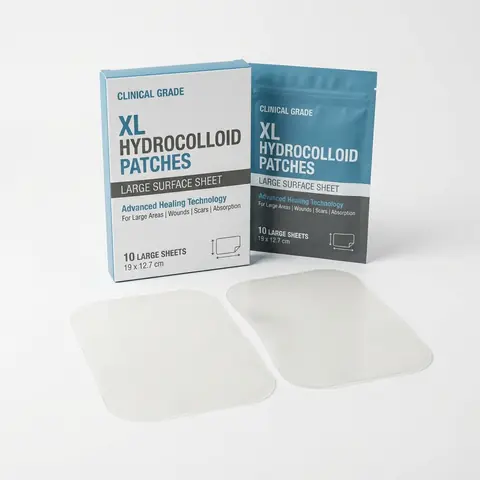
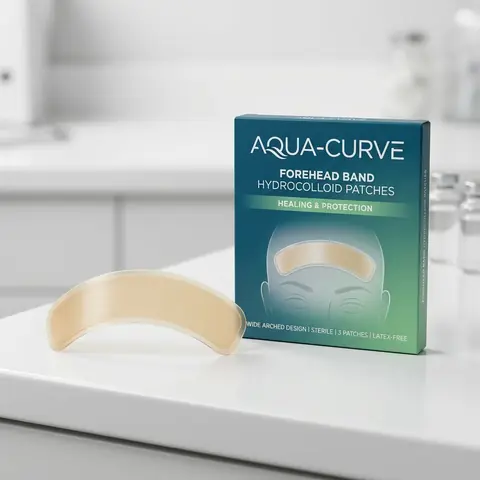
How to use large and area patches

Large sheets of hydrocolloid, sometimes cut down to size.
Larger or curved patches sized for the cheek or jawline.

A curved patch shaped to sit on the forehead.

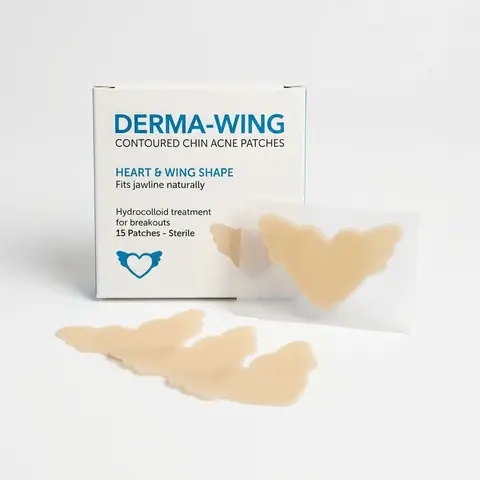
A contoured patch shaped for the chin and jawline.

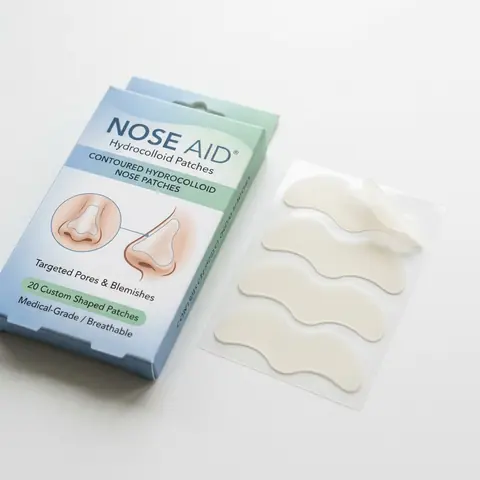
A contoured patch shaped for the nose.
Clean, dry, bare skin is the rule that matters most. Then cover the whole spot, leave it alone, and take it off when it is white, lifting, or the pack's time is up. Always follow your pack directions. Step-by-step guide.
The best evidence is small and short. In a 14-day trial presented in 2024, popped and draining spots looked better with a patch from day 1 and day 4, and closed spots improved less. A 2025 open-label trial of an unmedicated patch reported smaller spots by day 2. These studies looked at how spots looked, not at preventing breakouts. Read the evidence guide.
Many people use patches without trouble, but adhesives and added ingredients can irritate skin. Stop using a patch if your skin burns, blisters, swells or itches badly. Choosing a patch for sensitive skin.
Is your skin burning, blistering, swelling, or itching badly?
Yes: Take the patch off. Do not put another on that spot. Ask a pharmacist or doctor.
No: Go to the next question.
Is there mild pinkness that fades soon after removal?
Yes: This can be mild irritation. Give your skin a break before the next patch.
No: Go to the next question.
Has the redness spread beyond the patch, or does it happen every time?
Yes: Stop using that product and ask a doctor, who can check whether it is an allergy.
No: Keep watching, and follow the pack directions.
These are real questions people type into Google about patches. Each answer is short, with a link to the full guide.
A patch covers and protects one surfaced spot. Gels and creams are applied to skin to treat acne. Patches are not a substitute for acne treatment. Patches vs gels and creams
A hydrocolloid layer absorbs fluid from a spot that has a head or has opened, keeps it moist and covered, and keeps fingers away. It does not suck oil out of a closed pore. How hydrocolloid patches work
Irritation usually comes from the adhesive or an added active such as salicylic acid. A plain patch has the fewest things that can sting. Test on one spot and stop if skin burns, itches or swells. Patches for sensitive skin
Mostly hydrocolloid under a thin film. The white is the gel holding the fluid it absorbed, not dirt pulled from the pore. What is in a pimple patch
A little on closed bumps, and slowly. Not much on blackheads. A deep, painful bump needs a dermatologist. Which pimples patches help
They use the same kind of material. Patches are smaller, thinner and sometimes add ingredients. Bandages vs patches
Evidence is early. We found no independent trial of a store-bought microneedle patch against a plain patch. Microneedle patches
Peel slowly from an edge once it is white or lifting. A patch that fills up has absorbed fluid. Replace it with a fresh one only if the spot is still draining. Using each type of patch
Plain hydrocolloid, medicated, microneedle, thin daytime, thicker overnight, and shaped, large or area patches. Types of pimple patches
Often on spots with a head or opening, less on closed bumps, and not on blackheads or deep bumps. The best trials are small and short. Do pimple patches work?
Pimple patches can help some pimples look better within days, but not all of them. Here is what research shows, where it is thin, and when to see a dermatologist.
A hydrocolloid patch absorbs fluid and shields a spot. It does not pull oil out of a closed pore. Here is what is really happening.
Whiteheads and popped spots are a good match for a patch. Blackheads and deep, painful bumps are not. Here is how to tell them apart.
Clean, dry skin, the right spot and the right wear time make a patch stick and work. Here is the routine, plus the mistakes to skip.
Irritation from a pimple patch usually comes from the adhesive or an added active ingredient. Here is how to pick a gentler patch and what to do if skin reacts.
A patch covers and protects one spot. Gels and creams treat the skin. Here is how each fits, and why most people do not need to pick just one.
Pimple patches can help some pimples look better within days, but not all of them. Here is what research shows, where it is thin, and when to see a dermatologist.
Microneedle pimple patches promise to reach deeper than a sticker. Here is how they are meant to work, what small studies exist, and what we could not find.
Plain, medicated, microneedle, thin, thick, shaped and large patches: what each type is, what it is for, and how much evidence stands behind it.
A hydrocolloid patch absorbs fluid and shields a spot. It does not pull oil out of a closed pore. Here is what is really happening.
Whiteheads and popped spots are a good match for a patch. Blackheads and deep, painful bumps are not. Here is how to tell them apart.
Plain, medicated, microneedle, thin, thick, shaped and large patches: the steps that apply to all of them, and what changes for each type.
Irritation from a pimple patch usually comes from the adhesive or an added active ingredient. Here is how to pick a gentler patch and what to do if skin reacts.
Clean, dry skin, the right spot and the right wear time make a patch stick and work. Here is the routine, plus the mistakes to skip.
A pimple patch is mostly hydrocolloid, a soft absorbent material. Some add salicylic acid, tea tree oil, niacinamide or tiny dissolving spikes. Here is what each does.
A hydrocolloid blister bandage and a pimple patch use the same kind of material. The differences are size, thickness, added ingredients and how well each fits on a face.
A patch covers and protects one spot. Gels and creams treat the skin. Here is how each fits, and why most people do not need to pick just one.
Ask a dermatologist, doctor or pharmacist about deep, painful bumps, acne that is spreading or not improving, scarring, signs of infection, or a reaction to a patch. Patches are for the occasional surfaced spot. See the medical disclaimer and how we evaluate.